Operating a vehicle through the changing seasons in Riverton brings a unique set of challenges for your car’s exterior finish. The winter months cover local roads in heavy chemical de-icing agents, while the warmer seasons introduce sticky tree sap and fresh road tar from highway maintenance. If these contaminants are allowed to sit on your paintwork and undercarriage, they do more than just make your vehicle look dirty. They chemically bond with the clear coat and initiate a slow process of corrosion that can eventually compromise the structural integrity of your vehicle’s frame and suspension components.
At Fremont Auto Reconditioning, we specialize in reversing this environmental toll before it leads to permanent damage. Our professional technicians understand how different contaminants interact with your vehicle’s surfaces, from delicate clear coats to aluminum alloy wheels. Regularly scheduling a professional undercarriage flush and paint decontamination is the most effective way to preserve your vehicle’s value and prevent costly rust repairs down the road. If you are ready to give your vehicle the deep, protective cleaning it needs, you can find our service center address to plan a visit, or speak directly with our team by calling (307) 856-6348 to discuss your vehicle’s specific maintenance needs.
Table of Contents
- The Chemical Properties of Magnesium Chloride and Why It Clings to Car Paint
- Corrosive De-Icers: How Calcium Chloride and Magnesium Chloride Damage Metal and Wheels
- The Proper Decontamination Sequence to Safely Remove Tar, Sap, and Bonded Grime
- Touchless Car Washes versus Professional Winter Grime Removal
- Common Questions About Safely Removing Stubborn Road Contaminants
- Restoring and Protecting Your Finish at Fremont Auto Reconditioning
The Chemical Properties of Magnesium Chloride and Why It Clings to Car Paint
Magnesium chloride has become the standard de-icing agent on modern winter roads because of its ability to lower the freezing point of water more effectively than traditional rock salt. However, the exact chemical properties that make it an excellent de-icer also make it a major threat to your vehicle’s paint. Magnesium chloride is highly hygroscopic, meaning the compound actively attracts and absorbs moisture from the surrounding air. This physical property keeps the salt in a semi-liquid, sticky state long after the roads have dried.
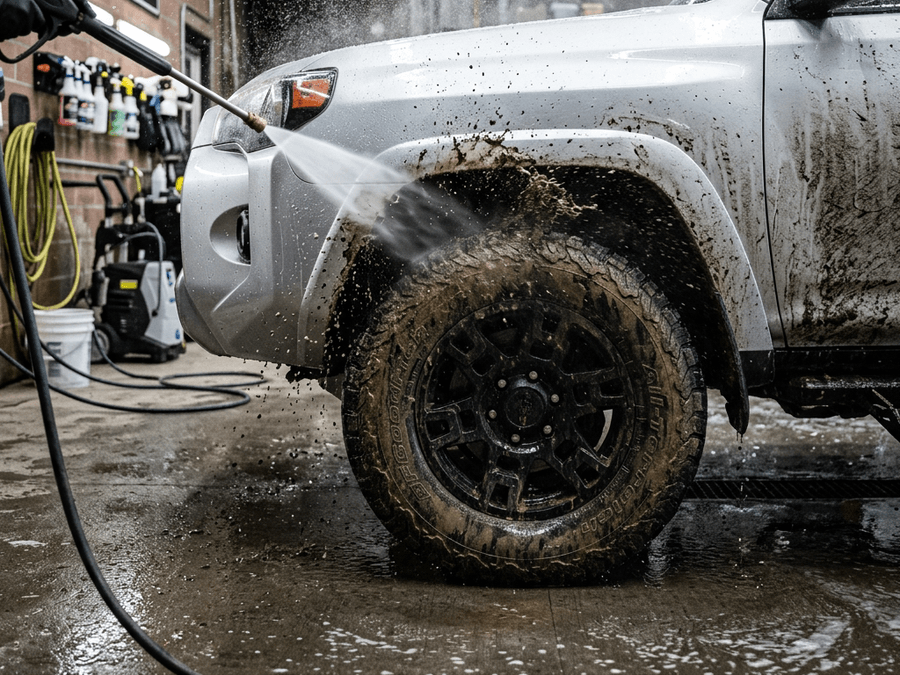
When this sticky mixture is kicked up by your tires, it coats the lower body panels, wheel wells, and undercarriage. Instead of drying into a brittle powder that might naturally flake off, the magnesium chloride remains damp and active. This prolonged moisture retention allows the chemical to cling aggressively to the paint’s clear coat, creating a stubborn, cloudy film. Standard water pressure from a garden hose is rarely enough to break this chemical bond, as the sticky film resists simple rinsing and requires targeted chemical neutralization to safely release its grip on the vehicle’s exterior.
Corrosive De-Icers: How Calcium Chloride and Magnesium Chloride Damage Metal and Wheels
While magnesium chloride is highly sticky, calcium chloride represents another common road treatment that poses an even more immediate threat to metal components. Both of these chemical de-icers are far more corrosive than standard sodium chloride, but calcium chloride is exceptionally aggressive because it is exothermic. When calcium chloride dissolves in water, it releases heat, which accelerates the chemical reaction that causes rust and metal oxidation. Consequently, vehicles exposed to calcium chloride can develop surface rust at an accelerated rate, particularly on unprotected steel frames and suspension parts.
The damage is not limited to steel components. Magnesium chloride is highly reactive with aluminum, making alloy wheels a primary target for degradation. When mag chloride sits on aluminum wheels, it initiates galvanic corrosion, which manifests as pitting, white powdery oxidation, and the eventual peeling of the wheel’s protective clear coat. The Wyoming Department of Transportation warns that repeated exposure to these de-icing agents accelerates the corrosion of vehicle frames, brake lines, and critical undercarriage hardware. Over time, this chemical assault can weaken structural welds and cause brake line failures, making regular undercarriage maintenance a vital safety practice rather than a cosmetic choice.
The Proper Decontamination Sequence to Safely Remove Tar, Sap, and Bonded Grime
Removing bonded contaminants like road tar, tree sap, and embedded iron particles requires a systematic approach to prevent scratching the clear coat. Attempting to scrub these sticky substances off dry paint will inevitably drag abrasive grit across the surface, leaving deep swirl marks. Professional detailers utilize a strict decontamination sequence that relies on chemical dissolution before any mechanical contact is made with the paint.
The first step in this process is a thorough wash using a pH-balanced automotive car shampoo to remove loose dirt and surface grime. Once the surface is clean but still wet, an iron remover is applied to dissolve embedded brake dust and industrial fallout. Following a complete rinse, a dedicated, solvent-based bug-and-tar remover is sprayed onto cool, dry panels. This product is designed to dwell for roughly one to three minutes without drying, allowing the solvents to break down the petroleum-based tar deposits so they can be gently wiped away with a clean microfiber towel.
For organic contaminants like tree sap, a different softening technique is required. Holding a warm, soapy microfiber towel over the sap spot for thirty to sixty seconds softens the hardened residue. This is followed by the careful application of diluted isopropyl alcohol or a specialized sap remover on a microfiber cloth. Detailing guides warn against using kerosene, gasoline, or other harsh petroleum solvents to remove tar from vehicle paint, because these products can dull, stain, or soften the clear coat and trim plastics. To remove any remaining fine, bonded road grime that chemicals cannot dissolve, a clay bar is glided across the lubricated paint surface. Because solvent-based products and alcohols strip away all wax and sealant protection along with the contaminants, it is critical to immediately rewash the treated areas and reapply a high-quality protective wax or sealant to shield the bare clear coat.
Touchless Car Washes versus Professional Winter Grime Removal
When drivers bring their vehicles into our service bays after a long winter, they often ask whether a quick run through a local wash is enough to stop the salt from eating away at their frames. While an automatic touchless car wash is a safe option for a quick rinse—avoiding the physical brushes that can grind abrasive salt crystals and sand into the paint—it rarely provides a complete clean. Touchless washes rely on high-pressure water and strong alkaline detergents to compensate for the lack of physical contact. While this can remove loose surface salt, it often leaves behind the stubborn, bonded film of road grime and magnesium chloride that clings to the lower panels.
Consistent DIY washing can help keep winter grime under control, but it is difficult for most vehicle owners to replicate the thoroughness of a professional winter grime removal service. Standard home setups lack the specialized high-flow undercarriage flushing equipment needed to thoroughly rinse the hard-to-reach crevices of the frame and brake lines. Furthermore, professional reconditioning services utilize commercial-grade, pH-balanced pre-soaks and targeted chemical neutralizers that safely break the bond of road film without damaging sensitive trim plastics or stripping factory clear coats.
Common Questions About Safely Removing Stubborn Road Contaminants
Q: What temperature makes magnesium chloride most active and corrosive?
Magnesium chloride remains chemically active and capable of melting ice at temperatures as low as minus ten degrees Fahrenheit. However, its corrosive behavior on metal surfaces actually peaks when temperatures rise above freezing and moisture is present, making early spring a high-risk period for rapid rust development.
Q: Can I use a razor blade to remove hardened sap or tar from my car?
A razor blade should only be used on exterior glass surfaces, keeping the glass thoroughly lubricated with soapy water and holding a new, sharp blade at a shallow angle. You should never use a razor blade on painted panels, plastics, or window trim, as it will cause deep, permanent scratches.
Q: Why do household dish soaps damage car paint during a wash?
Household dish soaps and all-purpose cleaners are formulated to strip grease, which means they will immediately strip away your vehicle’s protective wax or paint sealant. This leaves the clear coat completely unprotected against UV rays, acid rain, and road salts, accelerating paint oxidation and dullness.
Q: How long does it take for magnesium chloride to rust an unprotected vehicle frame?
An unprotected steel frame can begin showing visible surface rust and paint bubbling within a single winter season of heavy exposure. If the de-icing residue is not regularly flushed from the undercarriage, this surface rust can progress to structural pitting within a few years.
Q: What is the first step to safely removing winter road grime and film from my car?
The first step is always a thorough pre-soak with water or foam to loosen the abrasive sand and salt particles before any contact washing begins. Rinsing this loose grit away first prevents you from dragging it across the paint and creating heavy swirl marks with your wash mitt.
Restoring and Protecting Your Finish at Fremont Auto Reconditioning
Preserving your vehicle’s exterior finish and undercarriage from the harsh effects of road chemicals requires specialized care and the right equipment. Our professional team at Fremont Auto Reconditioning is equipped with professional-grade chemical decontaminants, undercarriage flushing tools, and protective sealants designed to defend your vehicle against the most stubborn road grime. Rather than risking clear coat damage with improper DIY scrubbing or harsh household cleaners, let our certified technicians do a paint decontamination, restore and protect your vehicle’s surfaces. You can easily find our reconditioning center to drop off your vehicle, or give us a quick call today to schedule a professional paint decontamination and undercarriage protection service.