Every factory paint job is a multi-layered system engineered to protect the metal body panels of a vehicle while providing a high-gloss aesthetic. The structure starts with an electro-deposited rust-preventative layer, followed by a primer coat that smooths out the surface and helps the color adhere. Next comes the basecoat, which contains the actual color pigment of the vehicle. The outermost layer is the clear coat, a transparent protective barrier designed to shield the color pigment from environmental elements, UV rays, and physical contact.
Read more: Paint Correction vs. Repainting: Restoring Your CarUnderstanding Your Car’s Paint Layers and Why Depth Matters for RepairThe entire paint finish on a modern vehicle is surprisingly thin. A factory-finished vehicle typically has a total paint thickness of roughly 100 to 180 microns, which is about 4 to 7 mils . Of this total, the actual clear coat layer is only a fraction of that depth, often measuring just 35 to 50 microns thick , which is roughly the thickness of a sticky note. Because the clear coat is so thin, any paint restoration process must be executed with extreme precision. If a scratch penetrates through this clear coat and into the color basecoat or primer below, standard polishing techniques cannot restore the surface .
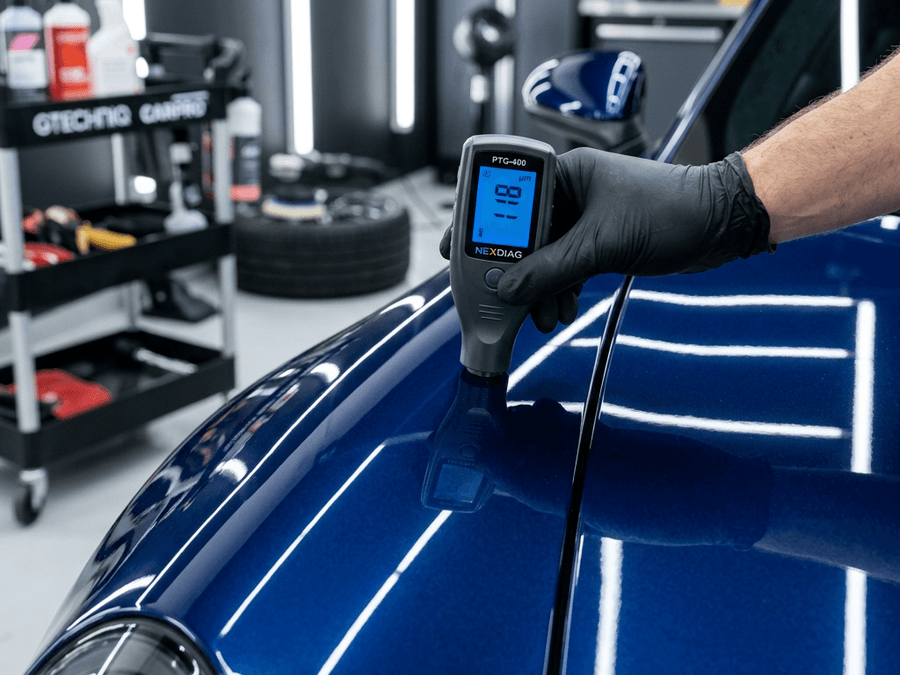
When assessing paint damage, our team uses a digital paint thickness gauge to measure the depth of the remaining clear coat. This measurement ensures we do not thin the clear coat beyond its safe limits. Drivers looking to verify their paint health can visit 1575 N Federal Blvd for a physical inspection. Alternatively, a quick call to (307) 856-6348 connects you directly with our specialists to discuss the best approach for restoring the finish.
Table of Contents
- The Fingernail Test and Identifying Clear Coat Damage
- Single-Stage vs. Multi-Stage Paint Correction Processes
- Paint Correction vs. Touch-Up Paint: Restoring the Surface
- Cost Analysis: Spot Repairs and Correction vs. Full Panel Repainting
- Protecting Your Corrected Finish from Automatic Car Wash Damage
- Quick Answers to Common Paint Restoration Questions
- Preparing for an Accurate Paint Assessment
The Fingernail Test and Identifying Clear Coat Damage
How is a minor surface blemish distinguished from a deep wound requiring a respray? The most reliable at-home method to evaluate paint damage is the fingernail test. Running a fingernail gently perpendicular across the scratch helps gauge its depth based on physical resistance. If the nail glides smoothly over the mark without catching in a groove, the scratch is shallow and resides entirely within the clear coat. These types of scratches are prime candidates for paint correction, as the surrounding clear coat can be safely leveled to match the depth of the scratch .
If a fingernail catches or drops into a distinct groove, the scratch has cut past the clear coat. Once a scratch penetrates the color basecoat, the primer, or the bare metal, machine polishing cannot fix the issue. Attempting to buff out a scratch that has broken through the clear coat will only thin the surrounding protective layer without resolving the damage, potentially exposing the underlying metal to moisture and rust.
Some scratches fall into a middle category where the nail catches only slightly. These borderline cases require a professional inspection under specialized lighting . A detailer will measure the remaining clear coat thickness to see if there is enough material to safely polish the area, or if a localized touch-up is a safer alternative to protect the panel.
Single-Stage vs. Multi-Stage Paint Correction Processes
The level of correction your vehicle requires depends on the severity of the defects and the hardness of the clear coat. Paint correction is the controlled removal of a tiny amount of clear coat to eliminate surface imperfections. A single-stage paint correction utilizes a single polishing pad and a medium-cut compound or finishing polish. This process is highly effective for removing light swirl marks, minor oxidation, and fine wash scratches . It typically restores about 50% to 70% of the paint’s original clarity and gloss, making it an excellent choice for daily drivers that do not require absolute perfection.
A multi-stage paint correction is a more intensive process designed for deeper scratches, heavy oxidation, and severe swirling. The first stage involves a heavy cutting compound paired with a compounding pad to physically level the clear coat down to the depth of the deeper defects. Because this aggressive cutting stage leaves behind a slight haze or compounding swirls, a second or third finishing stage is required. Technicians use progressively finer polishes and soft foam pads to refine the finish to a mirror-like clarity .
For most daily drivers, chasing 100% defect removal is not recommended because it consumes too much of the clear coat budget. Achieving an 80% to 90% defect removal rate provides a dramatic visual improvement while leaving a healthy thickness of clear coat to protect the vehicle over the long term. A digital paint thickness gauge guides our technicians, ensuring we stop polishing if readings drop below 70 to 90 microns, which indicates the clear coat is too thin for aggressive machine work.
Paint Correction vs. Touch-Up Paint: Restoring the Surface
A common misconception is that paint correction and touch-up paint are interchangeable solutions for any paint defect. In reality, these two methods work in completely opposite ways. Paint correction is a subtractive process. It uses machine polishers and specialized abrasives to level the surrounding clear coat, removing microscopic layers of material to make shallow scratches disappear. This process does not add any new paint to the vehicle; it simply refines the existing factory finish.
Touch-up paint is an additive process. When a rock chip or a deep scratch physically removes a chunk of paint down to the primer or metal, there is no clear coat left to level. The only way to repair this damage is to physically add new color-matched paint back into the void. This fills the crater and seals the exposed substrate from environmental moisture, preventing rust from forming on the steel panels.
Using touch-up paint requires a steady hand and a multi-step application. The area must be thoroughly cleaned of wax and oils before the paint is dabbed into the chip. Once the color layer dries, a clear coat is applied over the top to seal the repair. While touch-up paint protects the metal and makes the chip far less noticeable from a distance, it will rarely look as perfectly flat and seamless as a factory finish, whereas paint correction restores a completely smooth, mirror-like surface.
Cost Analysis: Spot Repairs and Correction vs. Full Panel Repainting
Deciding between a localized repair and a complete panel respray is often a balance of budget and aesthetic expectations. Correcting clear coat scratches or filling isolated rock chips with touch-up paint is highly cost-effective. These localized repairs keep the vehicle’s original factory paint intact, which is always preferable for maintaining resale value. Because factory paint is baked on at extremely high temperatures during manufacturing, it is typically more durable than any aftermarket respray applied in a body shop.
A full panel repaint becomes necessary when the paint damage is widespread or has penetrated too deeply over a large surface area. If a door panel has a deep scratch running from end to end that has reached the primer, or if the clear coat has begun to peel and delaminate due to severe UV damage, paint correction cannot help. In these scenarios, a body shop must sand the entire panel down, apply primer, spray a color-matched basecoat, and clear coat the entire section to ensure a uniform appearance.
While a full repaint resolves severe damage, it is a labor-intensive process that requires professional spray booths, curing lamps, and precise color blending into adjacent panels. For minor road rash on the front bumper or a few isolated scratches, investing in paint correction and professional chip repair is a fraction of the cost of a respray . It restores the overall gloss and protects the vehicle without the downtime and expense of traditional bodywork.
Protecting Your Corrected Finish from Automatic Car Wash Damage
Once a vehicle has undergone a professional paint correction, maintaining that flawless finish requires a complete change in how you wash your car. Automatic car washes that use spinning nylon brushes or heavy cloth curtains are the primary cause of swirl marks and micro-marring . As these brushes run over dozens of dirty vehicles throughout the day, they trap grit, sand, and road debris in their fibers . When those same brushes spin against your vehicle’s clear coat, they act like high-speed sandpaper, instantly re-introducing thousands of fine scratches into your newly corrected paint.
To preserve the depth and clarity of corrected paint, avoiding automatic brush washes entirely is highly recommended . Instead, proper hand-washing techniques using the two-bucket method, high-quality microfiber wash mitts, and a dedicated car wash shampoo will protect the finish . If hand washing at home is not feasible, utilizing a touchless automatic car wash is a safer alternative, as it relies solely on high-pressure water and chemical cleaners to remove dirt without physically touching the paint surface. Applying a high-quality ceramic coating or paint sealant after correction also provides an sacrificial barrier that helps resist light wash-induced marring.
Quick Answers to Common Paint Restoration Questions
Q: Does a ceramic coating fix existing scratches and chips?
A: No, a ceramic coating does not remove or fill paint defects. It is a microscopic, transparent protective layer that seals the paint as it currently looks. Any scratches, swirls, or chips present before application will be locked beneath the coating, which is why a thorough paint correction is always recommended before applying a ceramic coating.
Q: Can rubbing compound be used to fix every type of scratch?
A: Rubbing compound is designed to remove oxidation, water spots, stains, and surface blemishes, but it only works within the clear coat. If a scratch has penetrated down to the primer or bare metal, rubbing compound will not fix it and will only thin the surrounding clear coat unnecessarily.
Q: How can I find the exact paint code for my vehicle’s touch-up paint?
A: The paint code is typically located on the manufacturer’s compliance label, which is usually found on the driver’s side door jamb, under the hood, or inside the glove box. Matching this exact alphanumeric code is crucial to ensuring the touch-up paint blends properly with your factory color.
Q: How long should I wait before washing my car after a paint correction?
A: If your vehicle only received a paint correction and a standard wax or sealant, you can wash it immediately. However, if a professional ceramic coating was applied after the correction, you must wait at least seven days before washing the vehicle to allow the coating to fully cure.
Q: Can paint correction fix a car with peeling clear coat?
A: No, paint correction cannot fix peeling clear coat. Peeling indicates that the clear coat has completely delaminated from the basecoat below, meaning the clear coat is failing and no longer bonded. The only remedy for peeling clear coat is to have the affected panels professionally sanded and repainted.
Preparing for an Accurate Paint Assessment
The gravel roads and frequent highway debris around Riverton often lead to a mix of deep chips and light clear coat scratches. To help our team quickly evaluate whether your vehicle is a candidate for paint correction or requires a full panel repaint, you can take a few steps before bringing it in. Washing the vehicle thoroughly removes the road grime and dust that can easily mask fine scratches or make minor scuffs look like permanent damage. Photographing the affected areas under direct sunlight or a bright flashlight also helps capture the true depth of the scratches.
When local drivers bring their vehicles to our shop, they often want to know if we can assess the damage from a few clear photos before they make the trip down Federal Boulevard. While photos provide a helpful starting point, a hands-on inspection with a paint depth gauge is the most reliable way to guarantee a safe and effective repair plan. Our experienced team can measure your clear coat, test the depth of any scratches, and provide an honest assessment of what can be corrected.
Drivers who are ready to restore the depth, clarity, and shine of their vehicle’s finish can stop by 1575 N Federal Blvd to speak with our specialists. Our team is also available at (307) 856-6348 to schedule an appointment and get the paint looking its best.